New Home Construction Financing
Ground-Up Construction Loans in Tampa, Florida
Turn a bare lot into a finished home with financing that funds each stage of the build.
Building From Bare Ground in Tampa
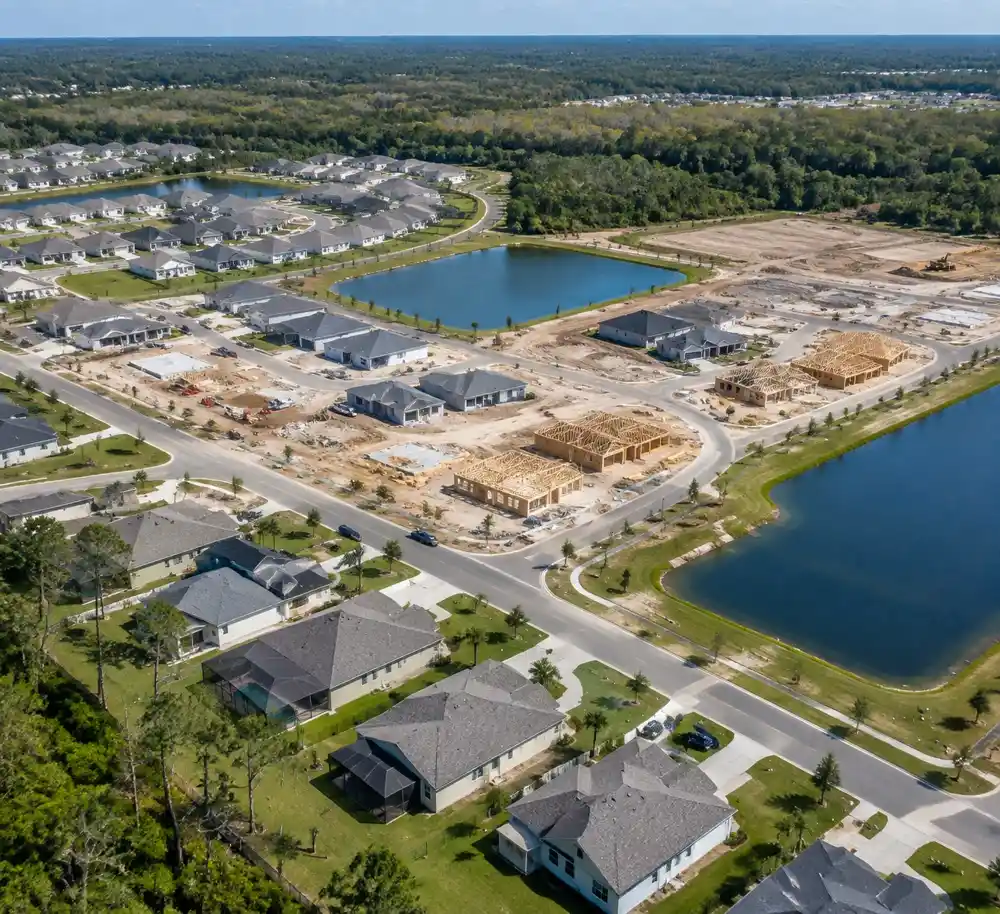
A ground-up construction loan pays for a house that does not exist yet. Everything starts with dirt: a cleared parcel, a survey, soil reports and a set of plans. From there the lender approves a total budget covering land, site work, vertical construction and soft costs, then releases funds in stages as the builder completes the work.
In the Tampa market, ground-up projects range from a custom home on an infill lot in South Seminole Heights to a four-bedroom house on five acres east of Plant City. The structure of the financing stays similar, but site costs vary enormously. A platted subdivision lot with sewer and water at the street may need little more than a pad and a driveway. A rural parcel may need clearing, a well, a septic system, fill and a long culvert crossing before a single footer is poured.
Lenders underwrite these loans on three pillars. The borrower must show the credit, cash and reserves the program requires. The builder must be licensed, insured and experienced. And the project itself must support the loan through an appraisal of its as-completed value, meaning what the finished home should be worth once it is built according to the plans and specifications.
Ground-up financing can be paired with a long-term mortgage for a primary residence, or it can be a short-term business-purpose loan for a builder or investor who plans to sell or refinance. Knowing which path you are on shapes the documents, the leverage and the way the loan ends.
Ground-Up Financing for Different Projects
Ground-up loans are flexible enough to fund many kinds of new construction, as long as the budget, builder and appraisal line up.
Custom primary residences
Build the home you plan to live in, designed with your builder and financed from lot through completion.
Rural acreage homes
Finance a house on larger acreage, including wells, septic systems, driveways and other site improvements.
Infill and teardown builds
Replace an outdated house in an established neighborhood with new construction that fits today's codes.
Small investment builds
Construct a single-family home or duplex intended for sale or long-term rental, using business-purpose financing.
From Lot to Keys: The Ground-Up Process
- 1
Confirm the lot and site costs
Verify zoning, utilities, flood zone and survey, and get site-work bids before plans are finalized.
- 2
Finalize plans and the budget
Your builder prepares stamped plans, a specification sheet and a line-item cost breakdown with contingency.
- 3
Submit the builder package
The lender reviews your builder's license, insurance, references and completed projects.
- 4
Appraise and close
An appraiser values the home as completed, underwriting signs off, and the loan closes with the first funds released.
- 5
Draw through completion
Inspections confirm each phase, funds follow, and the loan converts or pays off after the certificate of occupancy.
How we help
Site-cost awareness
We help you surface clearing, fill and utility costs early so the budget reflects the real lot.
Builder package support
We tell your builder exactly what the lender needs and help keep the review moving.
Clear exit planning
We confirm up front whether the loan will convert, refinance or be repaid through a sale.
Frequently Asked Questions
Can a ground-up loan cover the purchase of the lot?
Yes. Many programs fold the lot purchase into the construction loan so land and building close together. If you already own the lot, its equity may count toward your contribution.
How is the loan amount determined?
Lenders compare the total project cost to the appraised as-completed value and apply program limits to both. The loan is sized to the lower result, and the borrower covers the difference.
Who receives the draw payments?
Draws are typically paid to the builder or through a title company after inspection. Some programs require lien waivers from subcontractors and suppliers before releasing each payment.
What if my lot needs a septic system and well?
Those costs belong in the site-work portion of the budget. The lender will want bids, and county health department approval for septic is usually required before permits issue.
How long is the construction term?
Many ground-up loans allow around a year for construction, with extensions available on some programs. Custom and rural builds may be set up with a longer initial term.
Helpful Resources
Ready to talk about your build?
Tell us about your lot and the home you want to build. We will outline ground-up financing options and the documents to gather first.